
What Is a Thali Meal? The Art of the Perfect, Balanced Indian Thali
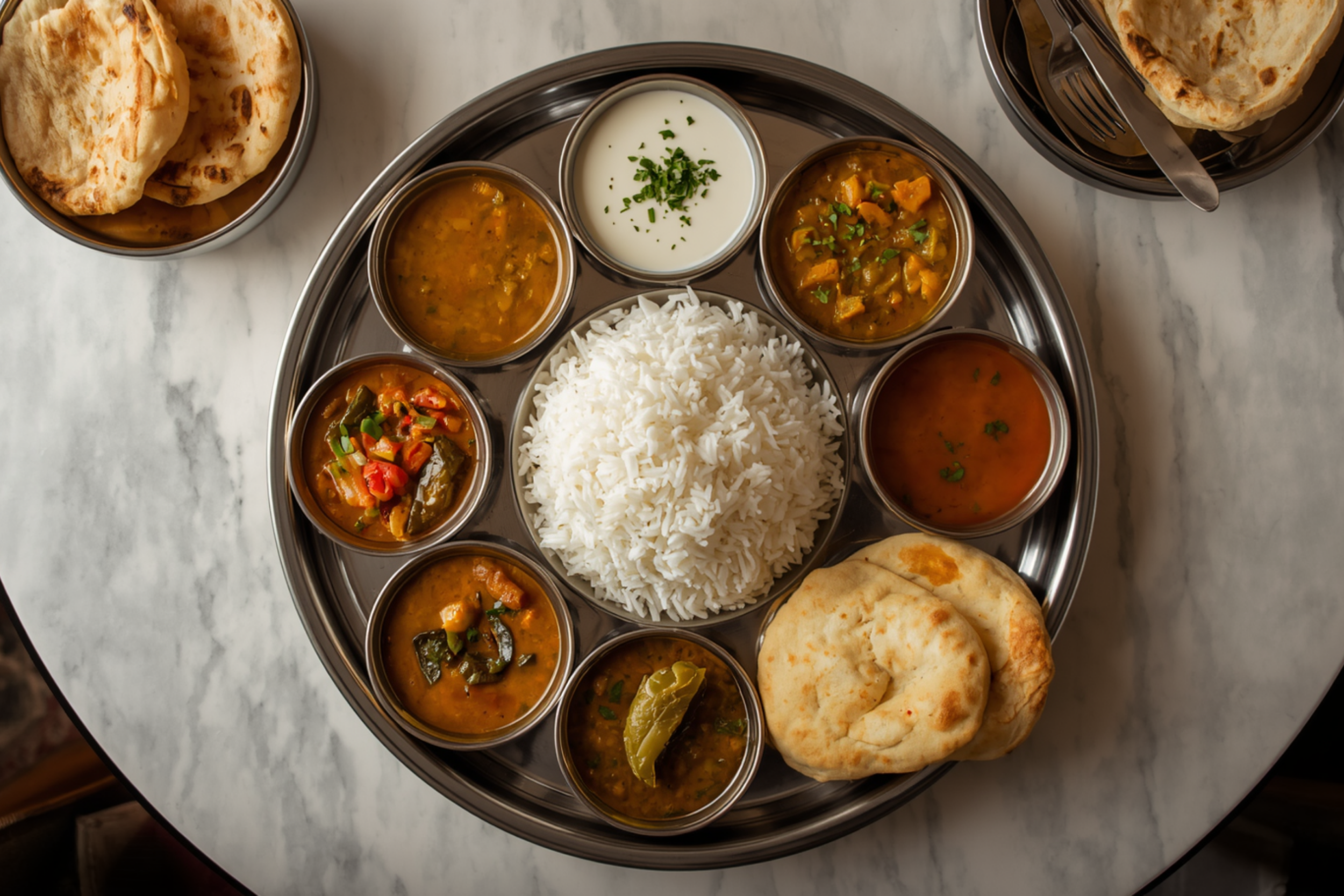
The Art of the Perfect, Balanced Indian Thali
A thali meal isn't just "a plate with lots of little dishes." In India, thali dining is a thoughtful tradition — one that brings together flavour, variety, and satisfaction in a way that feels both comforting and completely considered.
If you've ever searched "what is a thali meal" or wondered why Indian thali is often described as India's most balanced way to eat, this guide will walk you through the idea behind it, the regional variations, and what to look for when you want a genuinely authentic experience.
What Is a Thali Meal?
A thali — from the Hindi थाली, simply meaning "plate" or "tray" — is a composed meal served on a single platter, traditionally featuring a selection of dishes in small bowls called katoris, alongside breads, rice, and accompaniments.
The purpose is simple but powerful: to create a complete dining experience in one sitting, with contrasting flavours, textures, and ingredients designed to complement one another.
While the exact components of a thali meal vary by region and season, a thali commonly includes:
One or more vegetable dishes (sabzi)
A lentil or legume preparation (dal, rajma, chana, etc.)
Rice
Bread (roti, naan, paratha, or puri — depending on the regional style)
Yogurt or raita
Pickle and chutney
Something crisp or fried for texture (papad, bhaji, etc.)
A sweet element — sometimes a dessert, sometimes a sweet-leaning dish within the meal
Understanding what comes in a thali meal is the first step to appreciating why it feels so complete. Unlike ordering a single curry, a traditional Indian thali invites you to experience an entire kitchen's range in one sitting.
Why Thali Is Considered India's Most Balanced Meal
Thali is often described as balanced because it's built around variety — not just in taste, but in how the meal feels from the very first bite to the last.
Instead of one dominant dish, a balanced Indian meal like thali encourages you to move between:
Light and rich
Mild and spicy
Soft and crisp
Cooling and warming
This rhythm is a large part of what makes Indian thali so satisfying. You're far less likely to feel overwhelmed by heaviness or heat, because there's always something on the plate that restores balance.
The Six Tastes (And Why They Matter)
One of the most useful ways to understand why thali is considered a balanced meal is through the concept of the six tastes — a framework that has long been part of Indian culinary and Ayurvedic philosophy.
The six tastes in Indian cooking are:
Sweet (madhura)
Sour (amla)
Salty (lavana)
Pungent (katu — spice and heat)
Bitter (tikta)
Astringent (kashaya — the drying quality found in certain legumes and greens)
A well-composed Indian thali aims to include a spread of these tastes across its dishes. That doesn't mean every taste appears in equal strength — rather, the overall plate feels harmonious and complete.
For example: sweetness might come from jaggery-touched vegetables or a dessert; sour shows up in tamarind, chutney, or a squeeze of lemon; pungent comes from chilli, ginger, garlic, or mustard; bitter appears subtly in certain greens or spices.
The result is a thali meal with genuine dimension — one that keeps your palate engaged without relying on a single "big" flavour to carry everything.
Texture, Temperature, and Variety: Balance Beyond Flavour
Balance in a traditional Indian thali isn't only about taste. A truly enjoyable Indian thali plate also considers:
Texture: creamy dal, crisp papad, tender vegetables, fluffy rice
Temperature: warm curries paired with cooling yogurt or raita
Intensity: a richer dish offset by something lighter and fresher alongside it
This is why a thali meal feels so complete. It's curated to be varied, not repetitive — and that's the real difference between a thoughtfully assembled thali and a standard set meal.
