
How to Host an Authentic Indian Dinner Party at Home (Without the Stress)
How to Host an Authentic Indian Dinner Party at Home (Without the Stress)
How to Host an Authentic Indian Dinner Party at Home (Without the Stress)
Hosting an Indian dinner party at home can feel like a brilliant idea — right up until you start thinking about timings, spice levels, and whether everything will actually land on the table at the same time. The good news: an authentic Indian dinner party doesn't need to be complicated. With a simple structure, a balanced Indian dinner party menu, and a few smart shortcuts, you can create something that feels generous, comforting, and genuinely special — without turning your kitchen into a full-service restaurant.
What Makes an Indian Dinner Party Feel Truly Authentic?
"Authentic" isn't about cooking 12 dishes from scratch. It's about balance and intention — flavours that make sense together, a meal that feels thoughtfully composed, and a welcoming sense of abundance.
A few hallmarks to aim for in an authentic Indian dinner party:
Balance of flavours and textures: something creamy, something tangy, something fresh, something crisp
A complete plate: protein, veg, carbs, and a cooling element
Consistent seasoning: not everything needs to be hot, but everything should taste "finished"
Warm hospitality: guests feel genuinely looked after — water topped up, dishes served confidently, seconds actively encouraged
If you keep those principles in mind, you're already most of the way there. This is the same philosophy behind the art of balance in Indian cooking — and it applies just as much at your dining table as in a professional kitchen.
Step 1 — Choose the Right Format: Thali-Style vs Sharing Feast
For a stress-free evening, your first decision is the format. It determines how many dishes you need, how you'll serve them, and how calm you'll feel by the time guests arrive.
Option A: Thali-style (best for low stress)
A thali-style dinner is a balanced meal with several smaller portions served together on one plate. It's ideal for hosting an Indian dinner party because:
You can make 2–3 main components and round it out with simple sides
It looks genuinely impressive without requiring a huge menu
It naturally supports different dietary preferences — guests can lean into what they enjoy
Option B: Sharing feast (best for relaxed, help-yourself energy)
This is the "big bowls in the middle" approach — one or two curries, a rice, breads, and sides arranged for guests to help themselves.
Easier serving, fewer individual plates to manage
Great for families and casual gatherings
Slightly less composed visually, but wonderfully convivial and unpretentious
If your goal is authentic Indian food at home with a refined feel, thali-style gives you the most impact for the least effort. For a deeper look at what the thali format is really about, what is an Indian thali near Prestbury explains the philosophy behind it beautifully.
Step 2 — Build a Balanced Menu (The Simple Thali Formula)
Use this as your no-fail structure for a complete Indian dinner party menu:
One hero curry — rich or aromatic
One veg dish — dry or lightly sauced
One dal or lentil dish — comforting, budget-friendly, and perfect to make ahead
Rice — basmati, jeera rice, or a simple pilau
Bread — naan, roti, or paratha
Cooling side — raita or plain yoghurt with cucumber
Something sharp and fresh — kachumber salad, pickled onions, or a squeeze of lemon
A little crunch — papadums, sev, or a crisp salad topper
That's it. You don't need more than this — and if you follow the thali formula, the meal will feel complete, balanced, and genuinely considered.
A Low-Stress Sample Menu (Serves 6–8)
Choose one from each category:
Hero curry: Butter chicken-style (mild), chicken tikka masala, or paneer makhani
Dal: Dal tadka or dal makhani (slow and creamy — and far better the next day)
Veg: Aloo gobi, bhindi (okra), or chana masala
Carbs: Jeera rice + naan (shop-bought naan is completely fine)
Cooling: Cucumber raita
Fresh: Kachumber salad — tomato, cucumber, red onion, lemon
Crunch: Papadums + mango chutney
For dessert, keep it simple and impressive: kulfi, gulab jamun, or cardamom ice cream.
Step 3 — Shop Smart: A Short, Confidence-Boosting Grocery List
A good shopping list removes 80% of the stress from hosting an Indian dinner party. Here's a streamlined version you can adapt to your menu.
Core aromatics: Onions, garlic, ginger, fresh coriander, lemons/limes
Spices (a practical set that covers most dishes): Cumin, coriander, turmeric, garam masala, Kashmiri chilli (optional — great for colour and gentle warmth without serious heat)
Staples: Basmati rice, tinned tomatoes or passata, coconut milk (if you want a softer, rounder sauce)
Creamy elements: Plain yoghurt, double cream (optional), butter or ghee
Proteins & veg: Chicken thighs (forgiving and juicy — ideal for home cooking), or paneer; potatoes, cauliflower, chickpeas, spinach depending on your chosen dishes
Finishing touches: Mango chutney, lime pickle, papadums, naan or roti (fresh or frozen both work well)
If you're hosting in Cheshire and want to keep sourcing simple, most of these are available in larger supermarkets — then add one or two speciality items like paneer or a good-quality pickle to make the spread feel more complete.
Step 4 — Spice Shortcuts That Still Taste "Made with Care"
Shortcuts are not the enemy of authentic Indian food at home — inconsistent flavour is. Here are reliable ways to save time while keeping the result warm, layered, and genuinely considered.
Use a "base masala" approach: cook onions, garlic, and ginger down properly once, then divide it across two dishes. One effort, two results.
Bloom your spices: heat them briefly in oil or ghee before adding tomatoes or yoghurt. This single step makes a remarkable difference to depth and aroma.
Choose one signature finishing note per dish: a small knob of butter, a drizzle of cream, fresh coriander, or a squeeze of lemon. Don't layer all of them everywhere — restraint is what creates clarity.
Keep heat optional: serve sliced green chilli or chilli oil at the table so every guest can calibrate their own experience.
A refined Indian dinner party isn't about being the hottest dish on the table — it's about being the most balanced and confident.
Step 5 — Prep Timeline: What to Do the Day Before vs On the Day
This is where stress genuinely disappears when planning an Indian dinner party.
The day before:
Cook dal fully — it improves significantly overnight as the flavours settle
Make one curry completely, or at minimum prep the sauce base
Chop salad ingredients and store separately; dress only at the last minute
Mix raita, or prep cucumber and yoghurt separately to combine on the day
Set the table and arrange serving dishes if possible — one less thing on the day
On the day (2–3 hours before guests arrive):
Reheat dal and curry gently over a low heat; adjust salt and acidity
Cook rice closer to serving time for the best texture
Warm naan or roti in the oven just before guests sit down
Fry or roast papadums last minute to preserve the crunch
A hosting tip that feels "premium": Serve in smaller bowls and top up once during the meal. It looks composed and intentional, keeps food warmer for longer, and makes the table feel styled rather than crowded.
Step 6 — Plating & Presentation: Make It Feel Premium at Home
If you want your Indian dinner party to feel elevated without being formal, focus on three things: contrast, height, and neatness.
Contrast: white rice next to deep-coloured curry; bright green coriander on orange sauce; cooling white yoghurt beside warm, vibrant spice
Height: a small mound of rice, a swirl of cream, a scattering of crispy onions
Neatness: wipe serving bowl rims, use matching serving spoons, avoid overfilling — space makes things look considered
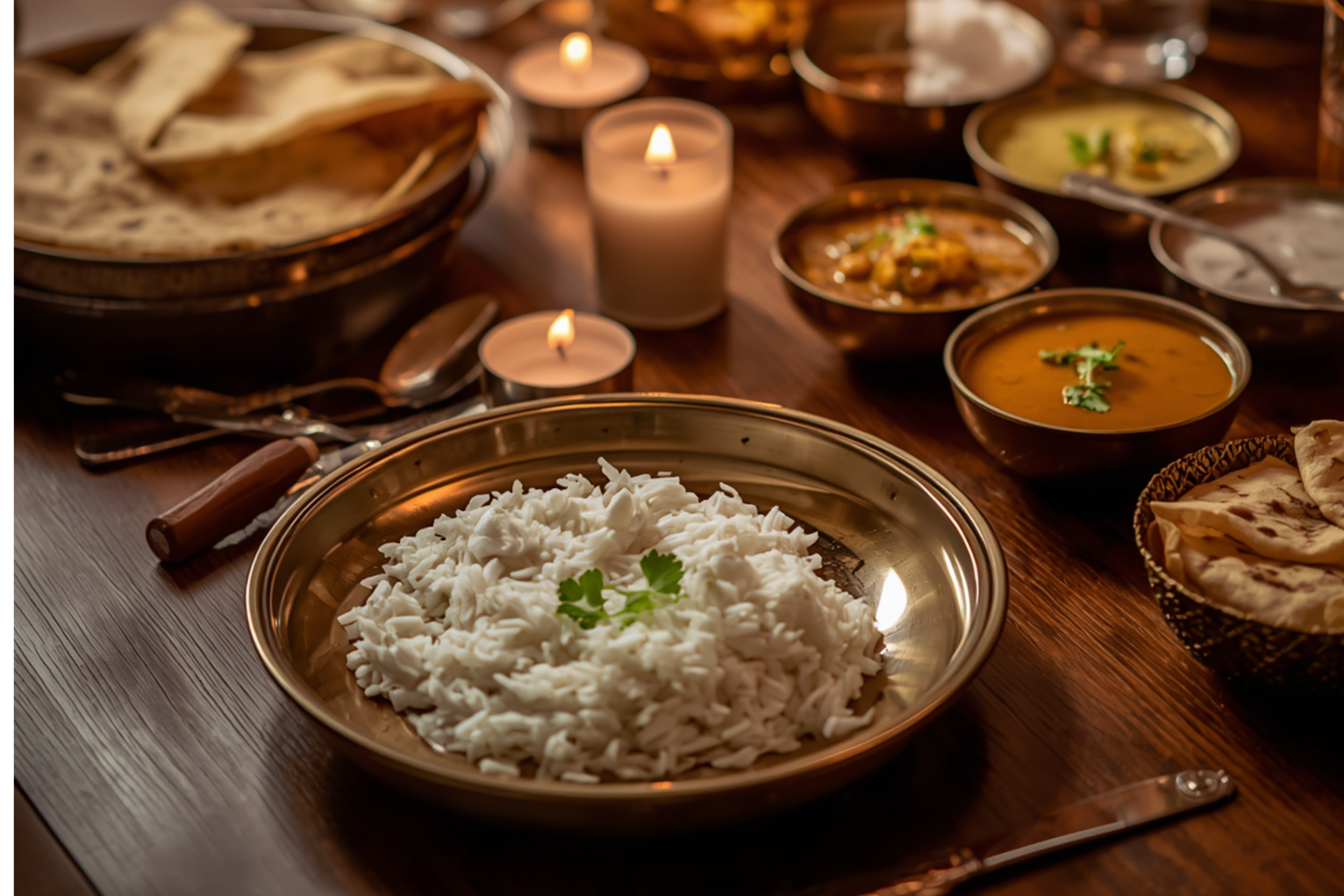
If you're doing a thali-style dinner at home, create the composed effect with:
One large dinner plate as the base
Three to five small bowls (katoris) for curry, dal, and raita
Rice and bread placed directly on the plate
This instantly signals "special occasion" — even for a relaxed, informal gathering. It's exactly the kind of presentation that makes authentic Indian food at home feel like a restaurant experience.
Step 7 — Atmosphere: Music, Lighting, and Table Details That Matter
Authenticity isn't only on the plate. The room matters just as much to the overall experience.
Lighting: warm bulbs or candles; avoid bright overhead lighting where possible — it flattens both the food and the mood
Music: low, rhythmic background — instrumental, modern Indian classics, or mellow lounge; keep it subtle enough for conversation
Table: linen napkins or a simple runner; a small bowl of lemons or fresh herbs adds an effortless, considered touch
Welcome drink: sparkling water with lime and mint, or a simple mango lassi — something to arrive to
These are small touches, but collectively they create the "we've been looking forward to this" feeling that separates a dinner party from a dinner.
When You Want the Experience Without the Work (And Still Want It Authentic)
Sometimes the best hosting decision is knowing exactly what to outsource.
If you love the idea of an authentic Indian dinner party but don't want to spend the day managing four burners and a timing chart, there are two genuinely good options:
A curated takeaway spread: you still set the table, choose the atmosphere, and do the hosting — without cooking multiple dishes simultaneously. The experience is yours; the kitchen work isn't.
A group meal out: everyone gets the full experience with consistent flavours, warm service, a comfortable setting, and someone else doing the washing up.
The key thing to look for — whether you're ordering in or booking a table — is balance and consistency across the whole meal, not just one standout dish. The best authentic Indian dining feels composed: sauces taste finished, sides complement rather than compete, and the presentation makes the meal feel like a proper occasion. That combination is what turns "a curry night" into something genuinely memorable.
If you'd like an expert alternative locally, Indian Thali in Prestbury is designed around exactly that elevated experience — authentic recipes, quality ingredients, refined presentation, and a calm, welcoming dining room that suits couples, professionals, and families equally well. For celebrations and group meals, booking a table at Indian Thali takes the planning completely off your hands.
Quick FAQs: Heat Levels, Dietary Needs, and Leftovers
How do I cater for different spice tolerances at an Indian dinner party?
Keep all mains mild-to-medium and offer heat at the table — fresh green chilli, chilli pickle, or a small bowl of chilli oil. A cooling cucumber raita alongside every dish means even the most heat-sensitive guests feel comfortable. This approach is the heart of how a well-balanced Indian dinner party menu should be structured.
What's the easiest way to include vegetarian options without cooking a separate menu?
Make your hero curry either chicken or paneer, then add a dal and a vegetable dish. That gives vegetarian guests a fully complete and satisfying meal without any extra effort on your part. The thali format is particularly well-suited to mixed dietary needs — everyone finds something that works for them.
Can I make an Indian dinner party menu gluten-free?
Yes — focus on rice, naturally gluten-free curries and dals, and serve gluten-free breads where needed. Always check shop-bought items (papadums, ready-made sauces, pickles) for hidden gluten-containing ingredients. Most authentic Indian food is naturally gluten-friendly once you move away from bread-heavy elements.
What keeps well for leftovers after an Indian dinner party?
Dal and most curries keep very well for 2–3 days refrigerated — and many taste even better the following day. Rice is best eaten fresh; if you plan to store and reheat it, cool it quickly after cooking and follow standard food safety guidelines. Most side elements (raita, salad, chutney) are best made fresh or the morning of.
What if I'd rather experience an authentic Indian thali without cooking it myself?
That's exactly what Indian Thali Prestbury is for — a refined, relaxed dining experience built around the thali format, with authentic recipes, seasonal ingredients, and the kind of balance that's genuinely difficult to replicate at home. You can explore the menu or make a reservation directly online.
